The Epping Forest area is full of historic buildings as well as ancient trees. Churches, chapels, hunting lodges and haunted pubs, the area is full of interesting buildings with fascinating histories (and photogenic foibles). Here are a handful of images to show you just some of the historical interest to be found here in South-West Essex, on the edge of London.
The Queen Elizabeth Hunting Lodge has to feature in any mention of the history of Epping Forest. From Elizabeth I to William Morris (whose first recorded interest in textiles was during a visit to the hunting lodge - read more about him
here), this building has touched upon the lives of many important figures. The lodge was actually built for Henry VIII, back in 1543. The two photos above show the hunting lodge during a medieval re-enactment event, a chance to see history come to life at the hunting lodge. The hunting lodge and the newly-built visitor centre next door are excellent places to learn more about the forest (and "The View" visitor centre does indeed have fantastic views out over Chingford Plain), and there are a number of marked trails leading out from here to help you explore the woodland. Find out more about the lodge and upcoming events at the
City of London website.
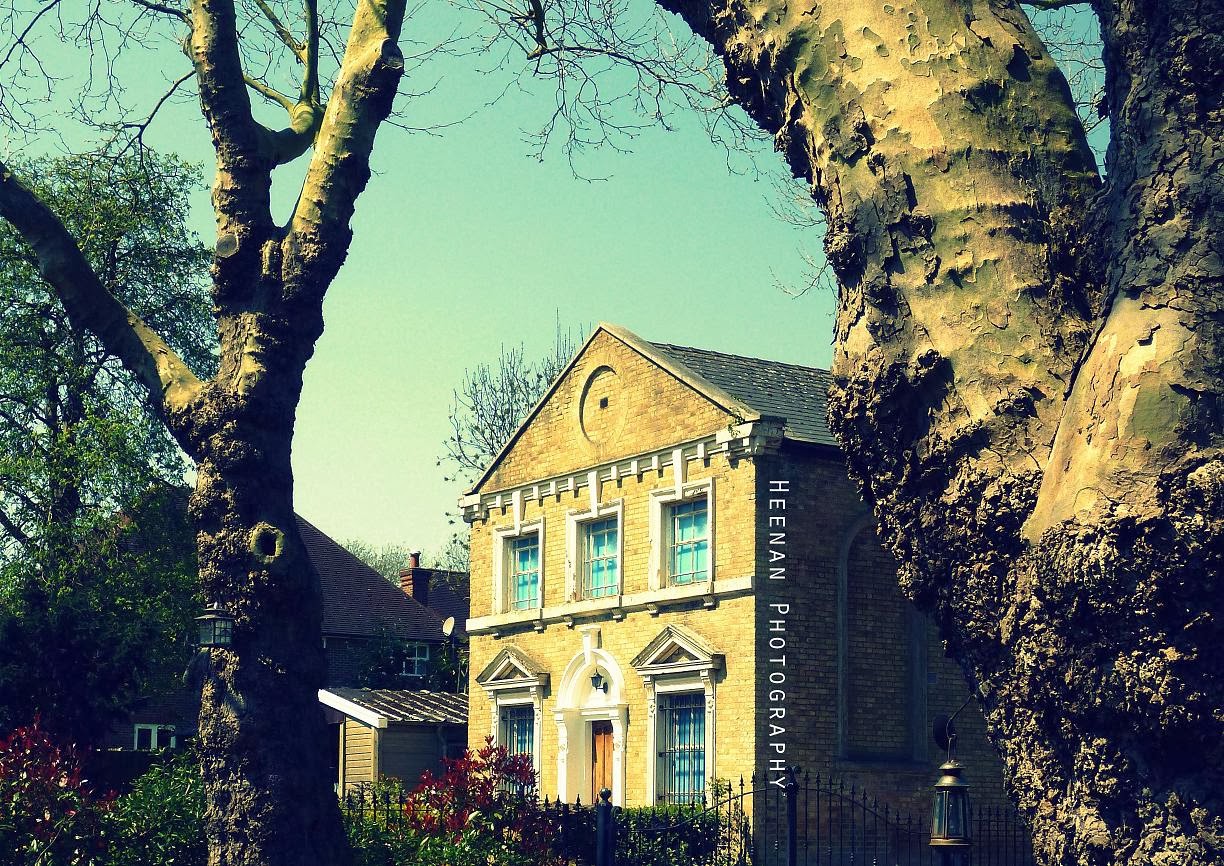 |
| "The Chapel" in Chigwell Row |
The Chigwell Row chapel above, dominated by very grand Plane trees, was opened in 1804 (although the frontage is probably more recent according to
British History Online) and it is now a United Free Church. The building, though squat and rectangular, looks stunning when its golden bricks soak up the sunlight. Chigwell Row was an outlying hamlet on the very edge of Hainault Forest, and although development has since joined it up with neighbouring settlements it still retains some pretty village features (and some of nearby
Hainault Forest still remains to enjoy).
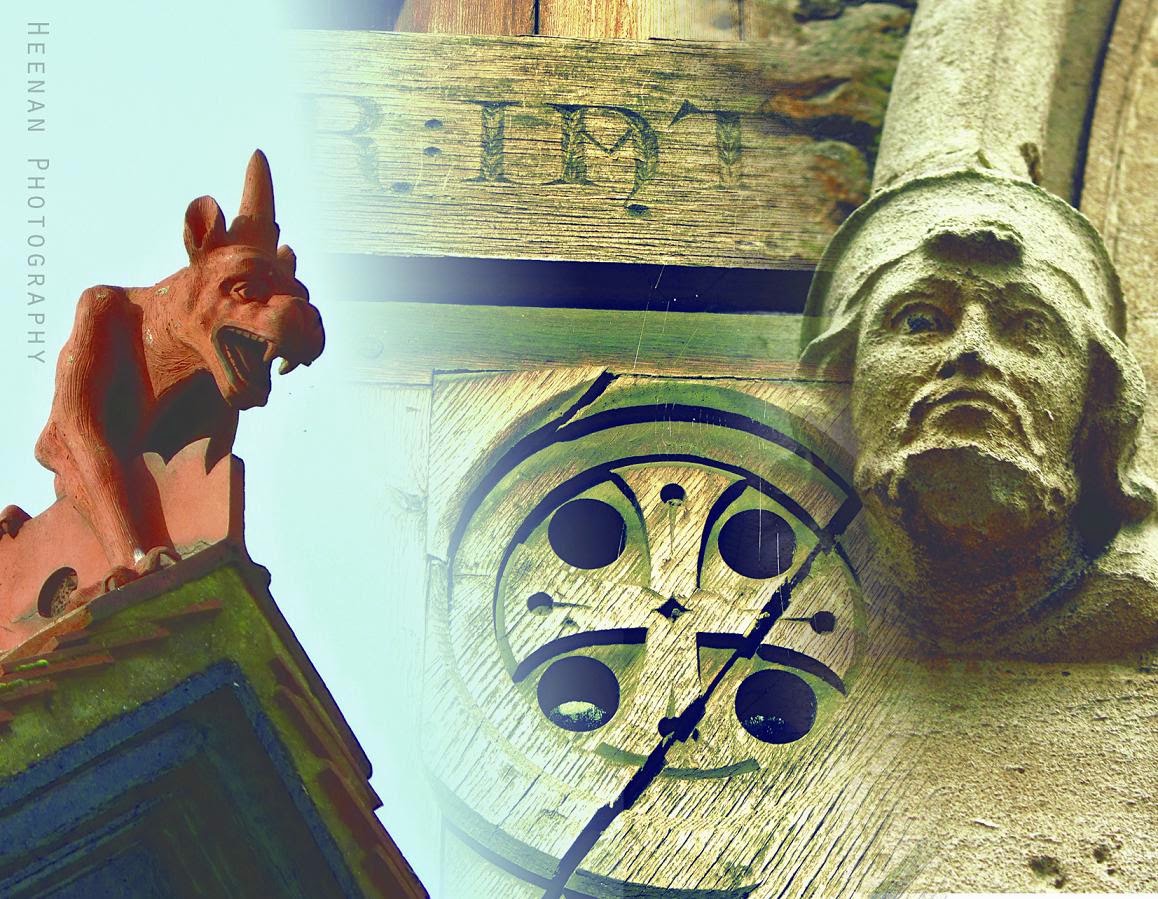 |
| Some of the fascinating features that can be found on buildings in the area |
And in this final image, a montage of building features. On the left is one of the gargoyles which grace the roof of the
Queen Elizabeth Pub in Chingford. Just around the corner from the hunting lodge, this pub is reputedly haunted (did the ghost inspire the gargoyles, or vice versa?). In the middle of the montage is a Norman Cross, part of the original Norman doorway of St. Mary's Church in Chigwell Village (built in 1160). Finally, the head to the right of the montage is part of the decorative stonework around the arched doorways at the All Saints Church in Chigwell Row (next to Hainault Forest). Besides being a very fine piece of masonry, the face seems to have a quiet dignity which is very suited to a man of stone.