Showing posts with label macro. Show all posts

Saturday, 23 May 2015

Langdon Hills: Feeling Blue

"Feeling Blue" by Heenan Photography
"Feeling Blue": Common Blue Butterfly, Langdon Hills, Essex
A rather ragged-looking blue butterfly rests a moment in one of the wildflower meadows of Langdon Hills Country Park, near Basildon in Essex.

The larvae of this butterfly feed on Bird's-foot Trefoil (Lotus corniculatus). Adults will also feed on Bird's-foot Trefoil, and a variety of other plants besides (read more at www.ukbutterflies.co.uk).

Many of the butterflies in the Lycaenidae family have interesting relationships with ants. The chrysalis of the Common Blue attracts ants that protect it from predators. Larvae can also produce nutrients to feed ants (read more on Wikipedia).

Saturday, 18 April 2015

Bluebells Arising


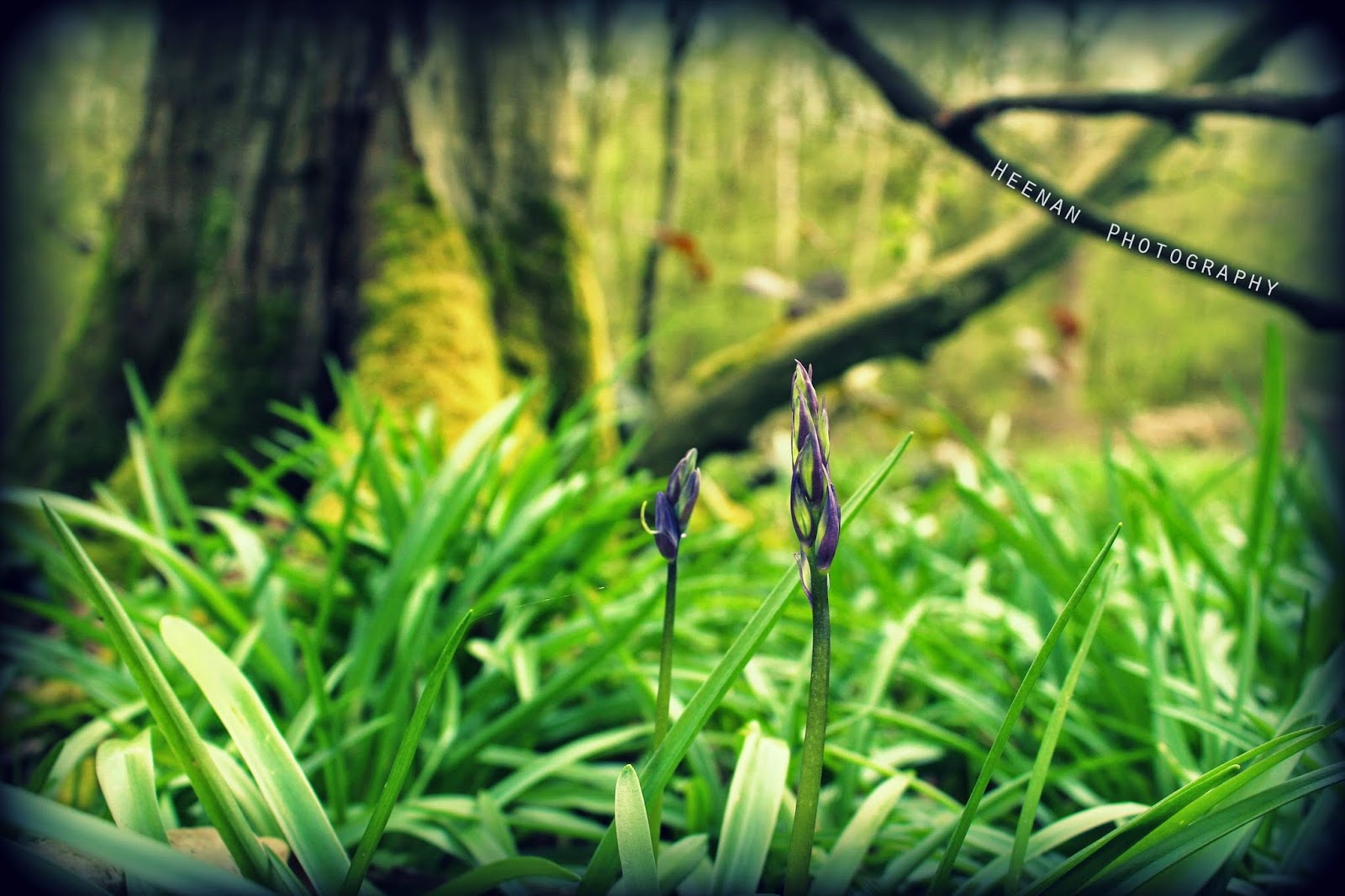
Spring is most definitely underway here in the UK, and the signs are all around us. In the Langdon Hills this means some superb swathes of bluebells are soon to carpet the ancient woodlands with blue, and sweetly scent the air. Some woods on the ridge put on their display of bluebells earlier than others due to aspect and other factors, but suffice to say that it will be well worth visiting the various woods over the next few weeks.

Here you can see the first bluebells emerging in Martinhole Wood in Langdon Hills Country Park, and the dense mat of bluebell plants on the ground here presage the plenitude of flowers yet to emerge. The presence of these flowers here, plus others such as lesser celandine and wood anemone, indicate the age of the woodland. Bluebells are protected by law, so please remember not to pick them... Take a photograph, it will last much longer anyway!

Saturday, 2 August 2014

Marbled White at Langdon Hills


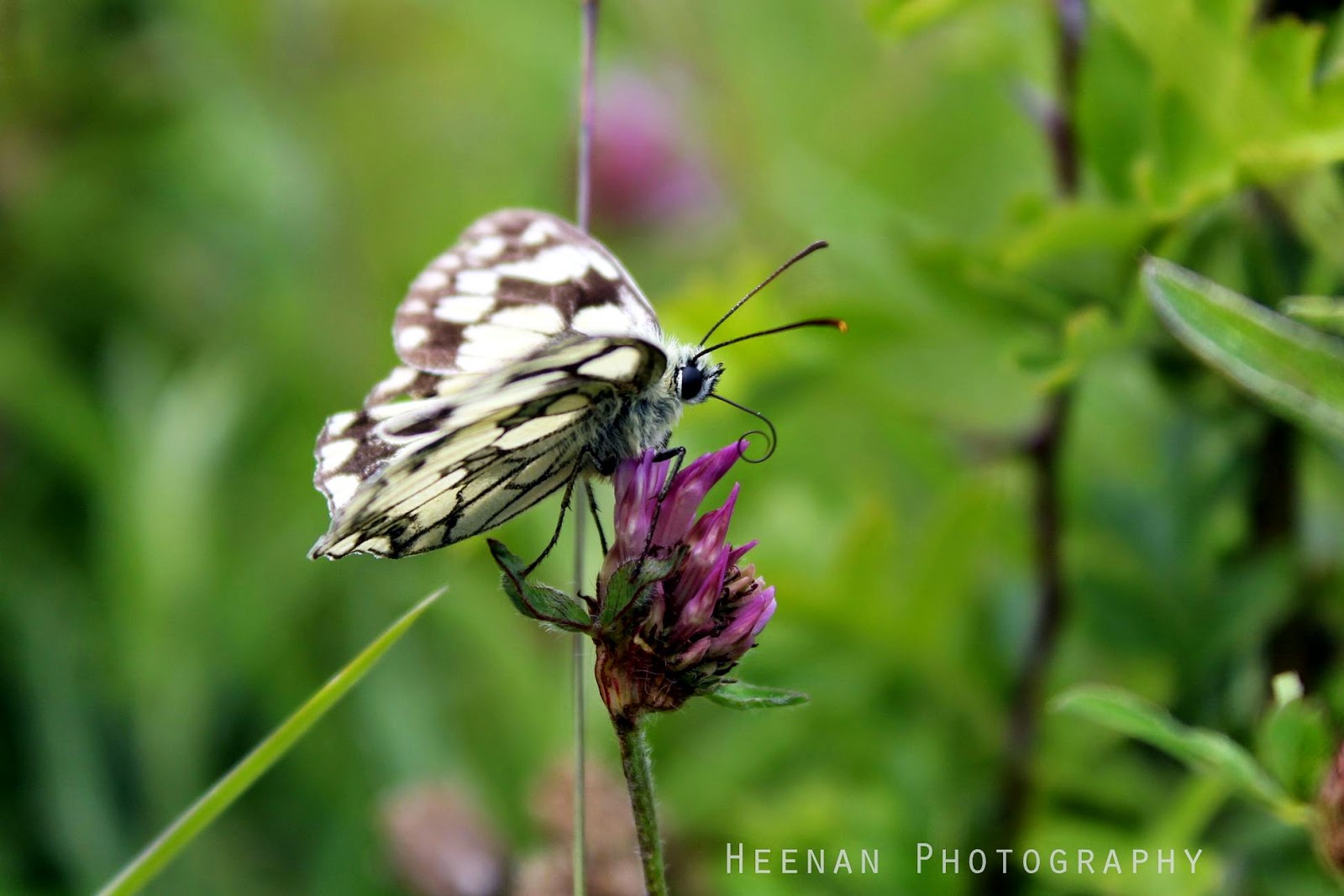
This shot captures a Marbled White butterfly, feeding on red clover at Langdon Hills Country Park, in Thurrock (Essex). The site has a number of meadows, supporting a myriad of insects and other wildlife - including 33 species of butterfly. Many of these are on the wing now that the British summer is most definitely here. Below we have some more information about the Marbled White butterfly, from Naturalist Natasha Lodge.
- Tom Heenan, Photographer

The Marbled White (Melanargia galathea) is actually more closely related to the 'Brown' butterflies than the 'White' butterflies due to its life cycle and habits. It has distinct black and white markings that make it easy to recognise. Small, red, parasitic mites are often seen on the bodies of Marbled Whites, but these do not pose a threat to the butterfly in small numbers and do not detract from their attractive colouring. It is a common species and is found throughout most of South and central England and in parts of South Wales. It is currently absent from Scotland, however the species is expanding northwards.
- Natasha Lodge, Naturalist

Saturday, 7 June 2014

Fading Comma

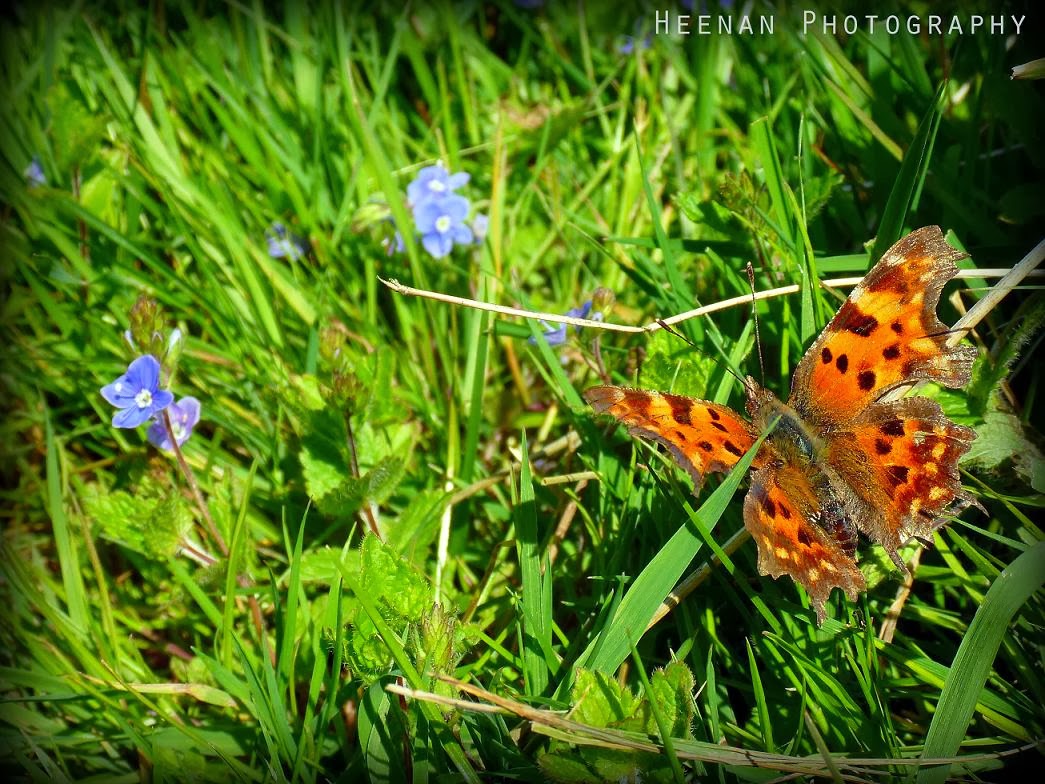
"Fading Comma", resting amongst the Speedwell flowers, May 2013.

The sun is finally shining on us here in the UK, or so it seems. The butterflies are making the most of the bright weather, with many of these bold and beautiful creatures flying around the woodlands and meadows of the countryside, or visiting gardens. Here is a shot from last Summer, of an old Comma butterfly, starting to look ragged but still beautifully coloured, resting on the grass amongst the Speedwell flowers. This shot was taken on the walk between Admiral's Park in Chelmsford and the village of Writtle.

Germander Speedwell (Veronica chamaedrys) is an interesting flower. Some attribute the name "Speedwell" to its use as a traditional remedy, where it was supposed to cure a person quickly (see article here). It may not be enough to restore the Comma butterfly in the face of climate change however.

The Comma butterfly, and other darker insects like it, may soon be fading away as a result of climate change. A study published last month found that global warming is favouring lighter coloured insects over darker ones; Zeuss et al. looked at a wide range of butterfly and dragonfly species across Europe and found that their colouring affects their ability to cope with temperature. The current distribution of these insects is linked to their colouring, and as temperature increases their distribution will too. Darker insects, like the Comma, retreat northwards and lighter insects appear in their place. “Until now we could only watch the massive changes in the insect fauna during the last 20 years. Now we have an idea of what could be a strong cause of the changes," said Dirk Zeuss, lead author of the study. This will help to predict future changes to insect populations in Europe.
Sunday, 13 October 2013

Serotinal Shots 2013


Here are two shots of late Summer that I have picked out to share. Autumn colours are coming to some of the trees already, such as the willows, sycamores and field maples. The Summer is still lingering in a few places however, and with some serotinal sunshine at the beginning of October I caught these pictures in the stunning Constable Country around Flatford Mill and Dedham Vale. This area sits at the edge of Essex and Suffolk, and has been popularised through the artwork of John Constable.

The flowers in the picture above, an unexpected splash of bright colour found lingering in the Cattawade Marsh area (between Flatford and Manningtree), are a yellow which recollects the easy sunshine of the high Summer months now past. These were more beautiful for their evanescence, as the cold weather would soon close in and cause their disappearance from the countryside.

The image "Oak and Granary" below sums up to me the pastoral beauty of the Flatford area, bathing in the afternoon light. The oak tree, a veteran full of character and cavities, looks yet Sumer-strong in its green foliage, and frames the fields and the 18th Century wool-store-turned-granary (now a bed and breakfast) behind it.
 "Oak and Granary" by Heenan Photography, features a veteran Oak tree which frames fields and old buildings in the Constable Country of Flatford.
  To see more Heenan Photography pictures, please visit the picture gallery. You can also browse the Heenan Photography Shop to see prints and merchandise for sale.

Tuesday, 18 June 2013

Hedgerow Damsel

"Hedgerow Damsel" by Heenan Photography

This Large Red Damselfly (the species name, not just a description!) rests on a thick stem of hawthorn, in a traditional hedgerow at the Roding Valley Meadows nature reserve in Essex. This nature reserve, although only a mile and a half long, contains almost ten miles of thick hedgerow. The value to wildlife of so much habitat is incredible. Hedges make good Edges, I like to say. The Large Red Damselfly is one of the first species of Damselfly or Dragonfly to appear in the Spring. Damselflies can be distinguished from Dragonflies in a number of ways, primarily by the way they hold their wings at rest (Damselflies hold them in line with their body) and by the way their eyes are set (Damselfly eyes are separated, on either side of their head).

The vibrant, rich red of the damselfly's body is reflected by russet tints in the bark of the hawthorn. Set against the backdrop of vibrant green foliage and creamy white May blossom, this makes for an attractive palette. This macro shot highlights the beauty of some of our invertebrate species; it is certainly worth the time to explore hedges and long grass to find some of the mini-beasts that are making use of these habitats.

"Damsel" arrived in our language via Old French, and meant "a young lady". It still hangs on in the English language in archaic expressions, such as "a damsel in distress". The damselfly in this photo looks far from distressed however!

Saturday, 10 November 2012

Birch Curl

birch photo by Heenan Photography

Bark peeling from a birch tree in Epping Forest in elegant curls. Taken in the Warren Hill area, on a scenic route from Loughton to Buckhurst Hill. Birch trees have horizontal marks on the trunk, long lenticels that let the tree "breathe" through its bark. 

"The lady of the woods" is a slender and elegant tree, although the angle of the shot makes this particular tree look rather rugged. Birch was the first letter of the Celtic tree alphabet, and represented the first month of the year. It would also have been among the first trees to recolonise Britain after the last ice age, and this ability to take quick advantage of an opportunity can still be seen today when birches colonise a bare hillside, or occupy a gap that opens up in an established woodland.

[View the photo gallery]

ShareThis

Related Posts Plugin for WordPress, Blogger...