Showing posts with label tree. Show all posts

Saturday, 28 March 2015

Essex Forest Fragments: Hatfield Coppice

Hazel Coppice in Hatfield Forest
This photo was taken in Hatfield Forest in Essex, a medieval royal hunting ground now owned and managed by the National Trust. This is a fragment of the Forest of Essex, that once covered most of the county. The site is over a thousand acres in size, and is managed using traditional techniques such as coppicing, pollarding, and grazing with livestock.

Coppicing, a technique used for thousands of years to produce useful wood products, has resulted in the interesting growth forms of the trees. Many native trees will regrow with multiple stems after being cut down, producing these distinctive, dense thickets in the photo above. Spring also brings a splash of chartreuse green to the picture, with fresh foliage on both hazel thickets and the ground layer.

Coppicing is often used in modern times as a tool for maintaining the biodiversity of woodlands. It can add variety to the structure of a woodland, and allows light to reach the woodland floor.


Saturday, 4 October 2014

Fallen Limb


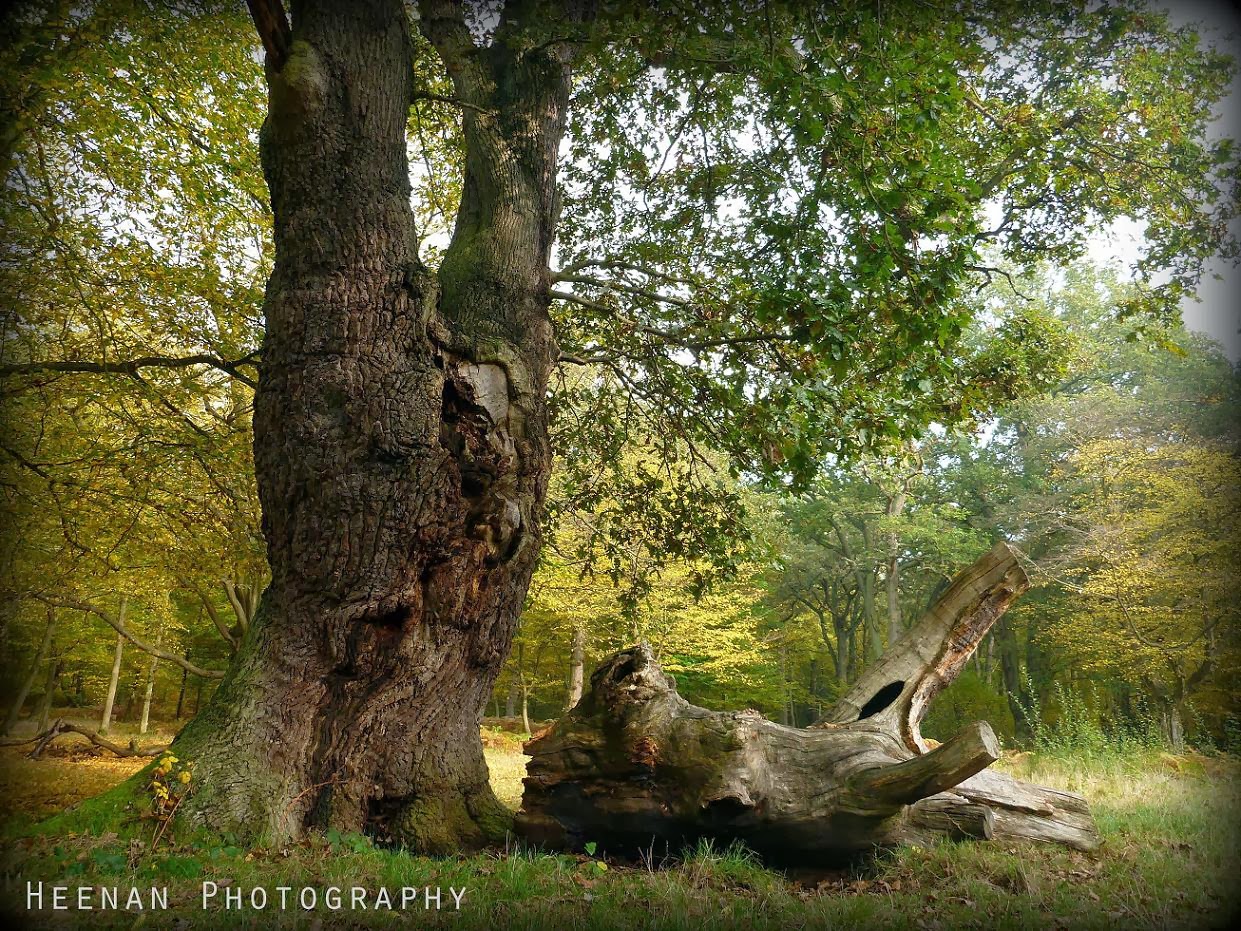
Taken in Epping Forest, "Fallen Limb" shows a veteran Oak pollard with a large fallen bough. The forest is starting to show autumnal colours here, with hornbeam showing yellow tones in the background of this picture.

Pollarding is a traditional woodland management technique which involves cutting back the tree to head height, to stimulate growth and produce useful lengths of wood. This often results in unusual shapes as the tree grows, particularly if the cutting regime isn't continued. Eventually, an unmanaged pollard can become unable to support the weight of its limbs, dropping branches or even being split in twain.

Read more about Epping Forest and Pollarding on the City of London website.

Saturday, 3 May 2014

"Cotswold Beech Burst"

Beech limbs seem to burst over a traditional Cotswold dry stone wall in this image by Heenan Photography.
"Cotswold Beech Burst", Maugersbury, Gloucestershire.
There is something about this image that I have just fallen in love with. Is it the extraordinary beech tree, whose limbs seem to burst over the traditional Cotswold dry stone wall? Is it the wall itself, that very woldsy structure formed of warm-toned Jurassic limestone and stone-age craft beginning to be colonised by ivy? It can't be the garish modern road-sign in the foreground. But perhaps it could be the juxtaposition of the three elements within one picture which I find appealing. On the edge of the delightful little rural backwater Maugersbury, itself a stones throw from Stow-on-the-Wold, this quiet country lane bears the intrusion of the modern world. In this image at least, the modern world has yet to take over completely: the enormous tree and the stone wall beneath it manage to dominate the photograph.

Tuesday, 1 April 2014

The Chignal Jester

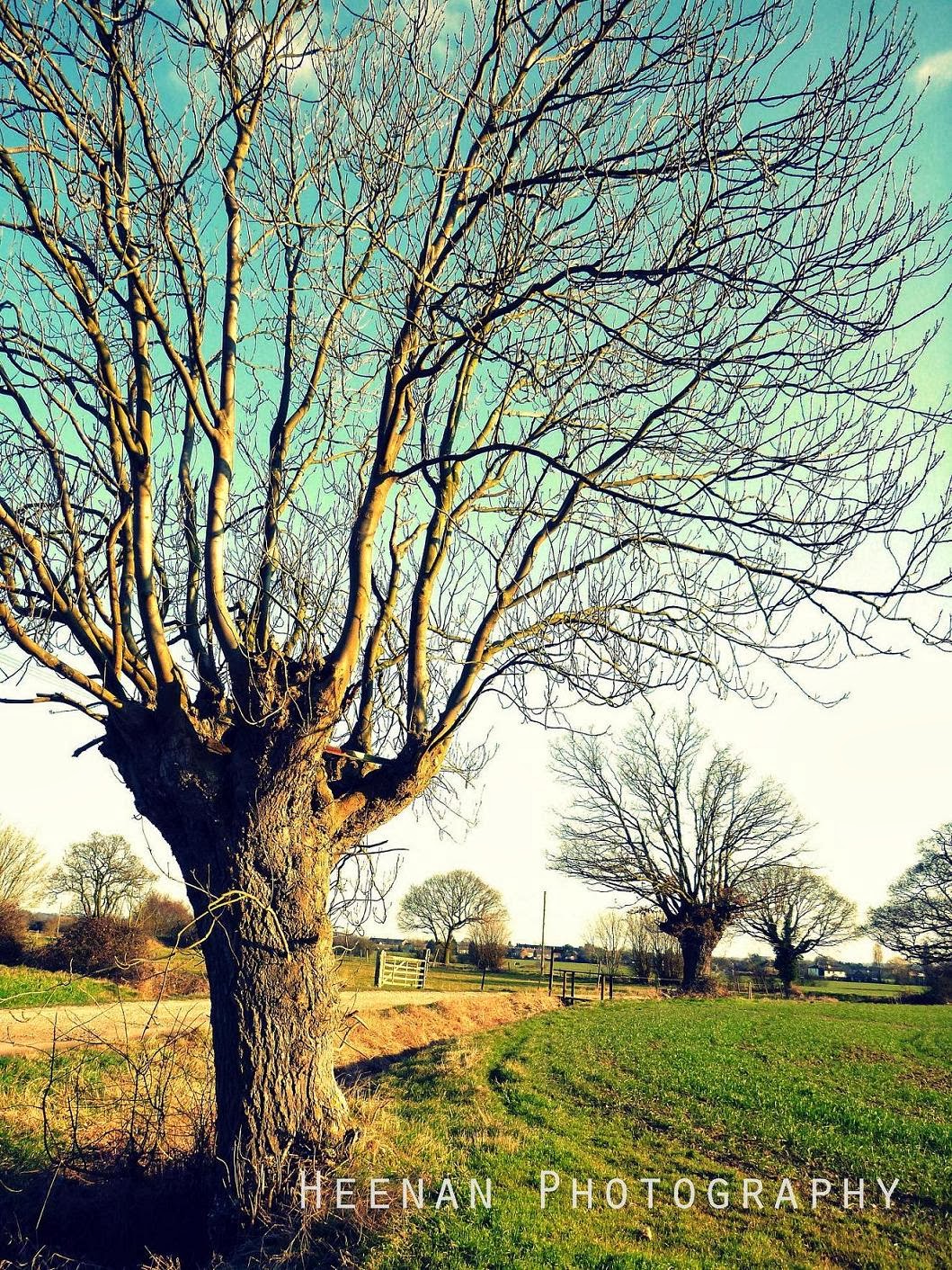
The Chignal Jester stands proudly on its head.
Has someone turned this tree upside-down as some kind of April fool? The ash tree in this photo, taken in rural Essex, certainly looks topsy-turvy. The short stout trunk ends in a blunt and lumpy way (as a result of pollarding) and the winter-bare, spreading branches above it strongly resemble roots. A number of gnarled, veteran ash trees can be found throughout the farmland around Chelmsford, but this one near the Chignals was particularly photogenic. Its trunk catches the winter sunshine, and its branches seem to embrace the blue sky. It presides over both the country lane and fields beside it, but the other trees distant in the background place it in context: this tree is one of many dotted through the agricultural landscape, and these provide added interest and a huge benefit for wildlife (providing food for butterflies and moths, for example).

Monday, 23 December 2013

Autumn Series 02

These two Autumn images feature some more advanced colours than the Autumn Series 01 post, with reds and browns much more dominant before the wintry weather this December finally caused the leaves to drop.


The field maple, an early starter when it comes to Autumn, had already lost many of its leaves in the photograph above, yet the remaining leaves show beautiful shades of colour and a classic maple shape against the sky. I couldn't resist taking a photo of the beech tree in the shot below either, as the canopy displayed an extraordinary range of colours at once, and the very vibrant red leaves saw an echo in the rusty red lichens on the trunk.


With some gusty Winter weather now here (some parts of Britain could experience gusts of up to 144km/h as storms hit today and tomorrow), it seems that will be all for the Autumn series for 2013. If forecasters are right about snow warnings though, we could be in for a very White Christmas indeed!

Saturday, 30 November 2013

Autumn Series 01


 Autumn is lingering this year; it is nearly December and there are still leaves on the trees, developing richer colours. The warm Summer and mild Autumn this year were reason enough to expect a spectacular display of Autumn colours (read more about why leaves change colour in an interesting Guardian article here), and it seems the trees have not disappointed. Trees such as horse chestnut, sweet chestnut and field maple led the way with some early yellows and oranges, whilst even the late developers are now getting into the swing of things. Between them the trees are displaying a dazzling variety of colours including golden, russet, amber and fawn.

The two photos featured here were taken in the beautiful Danbury Woods in Essex. The sweet chestnut tree in the photo above originally began with a juxtaposition of green, caramel and coffee coloured leaves, but later in the season the leaves are almost all a soft caramel yellow - the browner leaves falling away, whilst the green leaves have finally succumbed to Autumn. The vibrant chestnut tree is framed in the photo by the dead wood of an enormous fallen tree. This dead wood has incredible texture and subtle colouring, providing a pleasing contrast to the chestnut tree in the background.

The photo below shows the amber-orange foliage of a field maple, with sugars in the leaves beginning to develop red pigments. If we continue with Autumn sunshine and temperatures above freezing we should eventually reach the deep red colours that we rarely see in in years with wet and cloudy Autumns or after frosts.


Keep your eyes open for more pictures to follow in the Autumn series!

Sunday, 13 October 2013

Serotinal Shots 2013


Here are two shots of late Summer that I have picked out to share. Autumn colours are coming to some of the trees already, such as the willows, sycamores and field maples. The Summer is still lingering in a few places however, and with some serotinal sunshine at the beginning of October I caught these pictures in the stunning Constable Country around Flatford Mill and Dedham Vale. This area sits at the edge of Essex and Suffolk, and has been popularised through the artwork of John Constable.

The flowers in the picture above, an unexpected splash of bright colour found lingering in the Cattawade Marsh area (between Flatford and Manningtree), are a yellow which recollects the easy sunshine of the high Summer months now past. These were more beautiful for their evanescence, as the cold weather would soon close in and cause their disappearance from the countryside.

The image "Oak and Granary" below sums up to me the pastoral beauty of the Flatford area, bathing in the afternoon light. The oak tree, a veteran full of character and cavities, looks yet Sumer-strong in its green foliage, and frames the fields and the 18th Century wool-store-turned-granary (now a bed and breakfast) behind it.
 "Oak and Granary" by Heenan Photography, features a veteran Oak tree which frames fields and old buildings in the Constable Country of Flatford.
  To see more Heenan Photography pictures, please visit the picture gallery. You can also browse the Heenan Photography Shop to see prints and merchandise for sale.

Wednesday, 8 May 2013

Woodland Miscellany

"Wood for the Trees" by Heenan Photography
 
"Snaggle" by Heenan Photography Just some assorted woodland pictures from the far corners of my hard drive, while I plan the updates to the Gallery section of the website. The woods are all bursting into life at the moment, with Bluebells springing up beneath the trees, and lush herbage such as Garlic Mustard and Cow Parsley crowding the edges and roadsides. Ah, woodlands are fantastic! The following photos are a bit of a mixture, but are all from the woodlands - certainly one of my favourite places to be on a sunny day like today.

These two images above were both taken near Zell am See in Austria, on a misty morning climbing the mountain Schmittenhöhe. If a ten-hour hike to the top of the local mountain and back doesn't sound like fun, then perhaps it's best to avoid holidaying with an ardent walker and photographer like myself! The morning started off with a thick mist floating through the evergreens, creating an ethereal atmosphere and interesting lighting for these two photos when the sun blazed through. The mist thinned and finally burnt off around noon, leaving some stunning views over Zell am See and the adjacent lake, and surround countryside too. Myself and Natasha attained the lofty heights of Schmittenhöhe at 1,965m above sea level - around 1,200m above the town where we began, with temperatures reaching 23 degrees Celsius. Strange to think that the mountaintop was covered with a heavy snowfall just two days later.


  "Lone Tree Lomond" by Heenan Photography
This image was taken on the shores of Loch Lomond in Scotland, while walking the 96-mile long distance footpath "The West Highland Way" from Glasgow to Fort William. The lacustrine woodland petered out here, with one lone outlier tree standing in the very waters of the lake and taking pride of place in this shot. The lighting was very soft for the time of day (midday) giving this picture a very calm aspect. Wood and Water here both contribute to my favourite image from this eight-day hike.


Friday, 8 February 2013

Agrarian Veteran

Agrarian Veteran photo by Heenan Photography
 
I took a turn about the fields in the Chignal Smealy area last Saturday, and managed to capture this photo of a stunning veteran tree. The only way is Essex countryside!

The weather was blustery and cold, and there were dark clouds looming overhead. I thought to capture some photos of the dramatic skies over the fields, but in Winter the arable fields can be quite bare. Then I happened across some charming old trees, or perhaps tree (the trunks may have been part of one coppice stool beneath the soil) beside a ditch. The knobbly, weathered trunk sported some dazzling lichens, a small ray of sunlight on a wintry day. The fresher branches arch out to the left with a delicate drapery of last year's seeds, more keys to the past seasons of growth. This tree had faced many cold Winters, and Summers fair, and I'm sure it had seen much from its position overlooking the agrarian activities of the neighbouring fields.

In Norse mythology, the world sits on an ash tree. The ash, Fraxinus excelsior, sounds rather grand when named in Latin, and indeed it can be a rather grand tree in form. Naturally these trees live to just 250 years or a little beyond, but some of the coppice stools will persist for much longer and some suggest that the older coppiced ash stools may be at least a thousand years old - amongst the oldest living things in Britain. Indeed these trees can be remarkably resilient, bouncing back from disasters like lightning or severe storms, and this can result in some contorted shapes and growth forms. Whilst the trunk itself may only be one or two centuries in age, it is possible that the stool or roots beneath the ground could be far more ancient in these cases. So while the tall maiden Ash trees may be most impressive in size, the more venerable trees may rather be those that have been brought low by men or circumstance.

For those who haven't heard, there is a threat to British ash trees, the Chalara fraxinea fungus or "ash dieback". This was first discovered over here last year, although it has been known in mainland Europe since the 1990s. If the disease has a similar impact in Britain as it has had in Denmark and Sweden, the British countryside could see a change as drastic as that caused by Dutch Elm disease forty to fifty years ago. To read more about ash trees and the Chalara fungus, you can read this Times article and visit this Woodland Trust page.

[View the photo gallery]
Wednesday, 16 January 2013

New Year Update

Happy New Year! The Gallery page has been updated with new photos. These are some of my current favourites, and were all taken in local green spaces around Epping Forest. Here are two of the new photos:

Autumn Light and Leaf photo by Heenan PhotographyThe Lambent Pollard photo by Heenan Photography

Epping Forest is so full of beauty and interest, there is always something to please the eye and inspire the mind. The photo on the left, titled "Autumn Light and Leaf", was taken in a patch of the Forest in Chingford that has some stunning stands of hornbeam trees (including pollard and coppice compartments), and gave a very fine display of colour during the Autumn just passed. The second photo, "The Lambent Pollard", shows a much more robust Beech pollard, a grand veteran with a lot of character in the Forest near High Beach.

 [View the new photos on the Gallery page]

Monday, 24 December 2012

Warren Winter, and Merry Christmas

Two more Winter photos for you to enjoy!

"Warren Wood Winter" photo by Heenan Photography"Warren Winter Snow" photo by Heenan Photography

In Epping Forest, on a slope of land leading down from Warren Hill to Whitehall Plain, on a wintry Wednesday when snow had fallen, I took these two photos. It was only 4pm and the sun was already westering, enough to create some beautiful soft lighting. Combined with the soft snow and soft clouds in "Warren Winter Snow", the second image is quite the opposite of the first in which a stark winter oak dominates. The lighting is also rather diametric, with the highlight of the first piece being the tracked-through snow beneath the tree in the lower part of the picture, and the light in the second piece arising from the sun and sun-drenched clouds at the top of the picture.

Much as I love the gentleness of the second photo, and the way the mogul-textured snowy landscape reflects the puffy cotton cloudscape up above, I love the first photo "Warren Wood Winter". Trees are fantastic in so many ways; this one here creates a strong focus, and the twiggy winter branches are a rough contrast to the smooth snow below. The spreading nature of the branches tell a story too, of light and life with room to reach and grow.

May winter be full of light and life for all of you, don't hibernate the whole season through!  
Merry Christmas to everyone, and all the best for the New Year.


 [View the photo gallery]

Saturday, 10 November 2012

Birch Curl

birch photo by Heenan Photography

Bark peeling from a birch tree in Epping Forest in elegant curls. Taken in the Warren Hill area, on a scenic route from Loughton to Buckhurst Hill. Birch trees have horizontal marks on the trunk, long lenticels that let the tree "breathe" through its bark. 

"The lady of the woods" is a slender and elegant tree, although the angle of the shot makes this particular tree look rather rugged. Birch was the first letter of the Celtic tree alphabet, and represented the first month of the year. It would also have been among the first trees to recolonise Britain after the last ice age, and this ability to take quick advantage of an opportunity can still be seen today when birches colonise a bare hillside, or occupy a gap that opens up in an established woodland.

[View the photo gallery]

Friday, 9 November 2012

Epping Forest Ancients


"Epping Forest Ancients" photo by Heenan Photography

Two veteran trees in Epping Forest, one leaning against the other, as they slowly succumb to old age.
This is a photo I took this year, of one of my big interests: trees. Veteran trees are trees that, either through old age or a "hard life", have a huge interest for wildlife and for conservationists. The gnarls, hollows, decay and even sheer size that may be seen on such a tree mean that it can harbour many different kinds of animal, plant, and scientist.

Such trees can be used to deduce past conditions or management practices in an area; for example, these two trees show signs of pollarding, a traditional practice leading to a distinctive shape and potentially extending the life of a tree beyond its natural span.

Aesthetic value can be high in veteran trees, with their added architectural and textural complexity. They can also contain interesting little ecosystems for those who look closely, whether it be seedlings developing within a hollow or a swathe of enterprising mosses and ferns colonising the broad branches.

[View the photo gallery]

ShareThis

Related Posts Plugin for WordPress, Blogger...